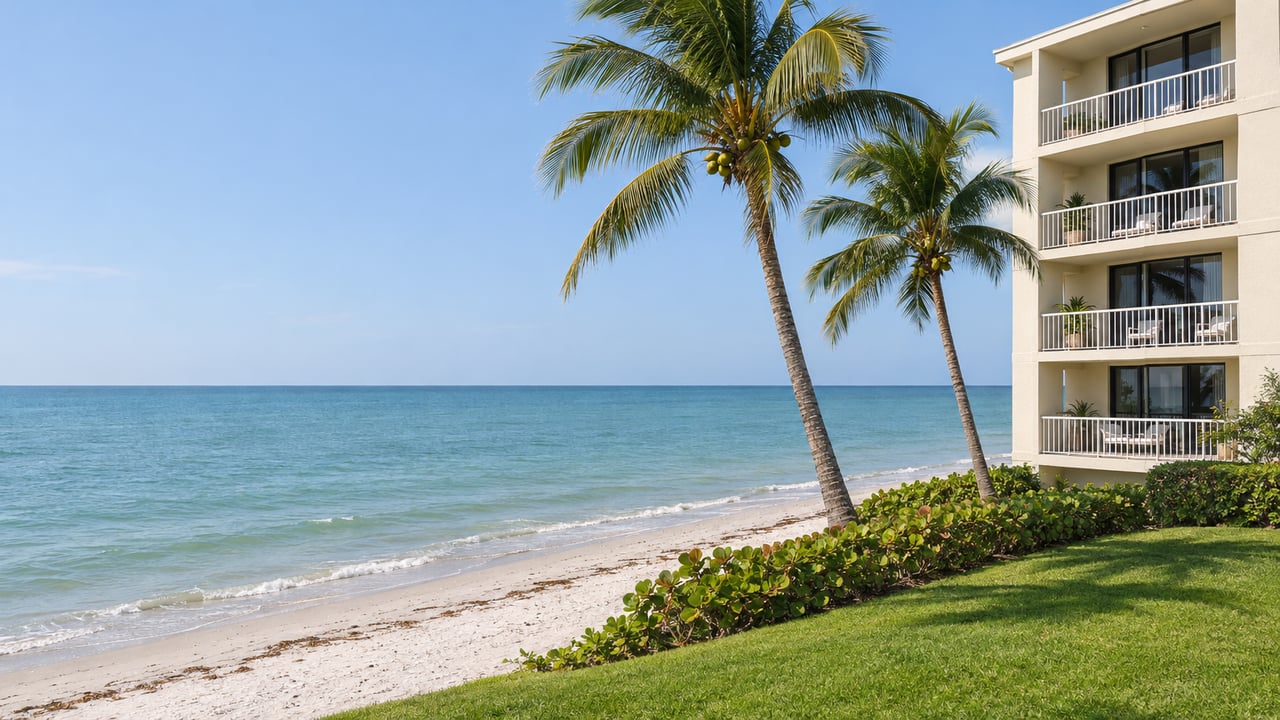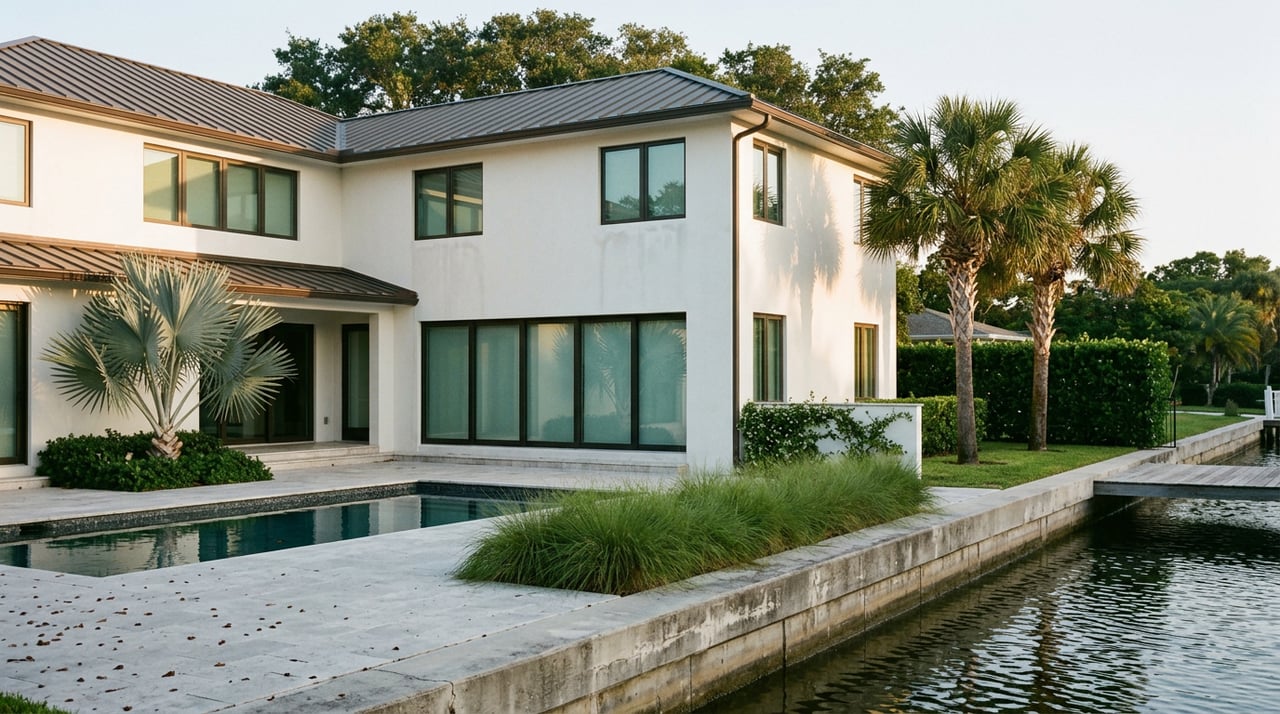
Royal Harbor sits on the east side of Naples Bay with roughly 400 waterfront homes and bridge-less Gulf access, which is exactly why buyers write offers here and exactly why deals stall. The kitchen finishes are not what unravel a Royal Harbor transaction in 2026. The marine file is. A seawall with no closed permit, a dock that quietly exceeds the City's protrusion percentage, or a boat lift installed without engineered plans can move a closing date, a price, or a buyer's willingness to sign at all.
The market is giving both sides more time to look. As of June 3, 2026, there were 35 active listings in Royal Harbor with an average of 146 days on market and a median list price near $3.95 million, while completed sales through the same window showed a median closer to $2.495 million. That gap between asking and clearing prices tells you where the leverage is. When homes take five months to sell, the buyer's inspector has time to open every file, and the seller who cannot answer questions in writing pays for it in the counteroffer.
Local marine contractors quote seawall replacement in Royal Harbor at roughly $300 to $1,200 or more per linear foot depending on material and access. On a 100-foot lot, that is a five- to six-figure line item that lives outside standard flood insurance.
The rulebook is unusually specific to your street
Most Naples waterfront communities fall under general dock ordinances. Royal Harbor does not. Under City of Naples Code section 56-93, the shore-normal dimension of a pier is restricted so that the combined width of pier, pilings, lift, and moored vessel does not exceed 25 percent of the waterway width at that point, and Naples maintains area-specific dock regulations that name Royal Harbor along with Aqualane Shores, Port Royal, Golden Shores and Oyster Bay, Park Shore, and the Moorings. Meaning the analysis a marine contractor did on a Coquina Sands canal will not transfer cleanly to a Sheepshead Drive lot.
Collier County layers its own limits on top. On manmade canals 60 feet or less in width that are not reinforced by a vertical seawall or bulkhead, dock facilities may protrude up to 33 percent of the width of the waterway, following the procedures in LDC section 5.03.06(C). All required Florida DEP permits for a dock must be obtained before Collier issues a county building permit, and lots with 60 feet or more of water frontage carry a 15-foot side setback for dock facilities.
Add the state and federal layer, and the picture sharpens. The Florida Department of Environmental Protection reviews dock projects to protect coastal resources, navigation, water quality, and state-owned submerged lands, with review varying by property, waterway, dock size, seagrass, mangroves, and whether boat lifts or dredging are involved. The U.S. Army Corps of Engineers oversees projects affecting navigable waters, and any project including seawalls, dredging, or large boat lifts triggers more extensive reviews.
The practical translation: a dock the seller believes is fine may be a legal nonconforming structure that cannot be rebuilt to the same footprint. That is the kind of surprise inspectors surface at day 12 of a 15-day due diligence window.
Seawalls age on a schedule, and buyers price accordingly
Seawalls in Royal Harbor are working assets with finite service lives. Rough industry ranges look like this:
| Material | Typical service life | What buyers should ask for |
|---|---|---|
| Concrete or armored | 40 to 75 years | Original permit, cap condition, tie-back inspection |
| Vinyl sheet pile | 25 to 60 years | Installation year, panel connections, deflection |
| Steel sheet pile | 25 to 60 years | Corrosion survey, cathodic protection status |
Royal Harbor's earliest homes date to the 1950s, and although the neighborhood has cycled through waves of teardown and rebuild since the late 1990s, plenty of original seawalls remain. A wall installed with a mid-life home renovation twenty years ago is now firmly in the second half of its usable life. Appraisers and buyers factor remaining life and expected maintenance into offer price whether or not the seller volunteers the data.
Sellers who want to control that math should get written estimates from local marine contractors before listing. Established Naples-area operators include Garland & Garland, building docks and seawalls in Naples since 1965; Greg Orick Marine Construction, a Collier County family firm; Kalvin & Calvin Marine Construction; Gulfshore Marine Construction; and SeaBee Marine. A pre-listing marine inspection with quotes attached does two things: it caps the buyer's negotiating room and it lets the listing team present the wall as a known quantity rather than a hidden liability.
The paperwork a Royal Harbor closing actually turns on
Whether you are on the buy side or the sell side, the file below is what a careful transaction pulls together. Missing pieces do not stop a sale, but each one is a lever the other side will use.
- Marine permit history through Collier County's CityView Online Permitting Portal covering the dock, seawall, boat lift, and any dredging. The portal URL was updated on December 11, 2025, and bookmarked links from earlier files may point to a dead page.
- Closed inspections and a Certificate of Completion for each marine structure. Florida law requires permitted work to be inspected and approved before a Certificate of Occupancy or Certificate of Completion is issued.
- Engineered drawings for the seawall. The City of Naples marine permit application requires engineered plans by a professional engineer or registered architect for all seawalls.
- FDEP authorization on file where applicable, whether an exemption letter, general permit, or individual Environmental Resource Permit.
- Army Corps sign-off on any work touching navigable waters.
- Flood zone and elevation certificate. Collier County adopted updated digital flood maps in 2024, and base flood elevation drives lender requirements and insurance quotes.
- Deeded slip or mooring rights confirmed for condominium units. On the Oyster Bay side of Royal Harbor, some buildings lease slips to owners at nominal annual rates, while others convey a specific slip with the deed. The difference matters for a buyer's boat and for resale.
Two additional wrinkles catch out-of-market buyers. First, Collier County's full fee schedule was amended effective January 1, 2026 under Resolution 2025-231, so any construction cost proforma built on 2025 numbers needs a refresh. Second, bald eagle nesting season runs October 1 through May 15, it is illegal to disturb nesting bald eagles, and contractors must comply with the U.S. Bald and Golden Eagle Protection Act. A nest within striking distance of a proposed project can push construction windows out of season, which affects both closing timing and any renovation contingency the buyer wants to write in.
Why this is a seller preparation issue, not a buyer inspection issue
The instinct in a slower market is for sellers to hold price and let inspection findings drive concessions. That is expensive in Royal Harbor.
Consider the mechanics. A buyer's marine inspector flags a seawall estimated at 40 years old with visible cap cracking. The buyer requests a $150,000 credit citing local replacement costs. The seller counters with $50,000, arguing the wall has years of life left. The disagreement now sits between two professionals whose numbers were assembled in a hurry, under contract, with a clock running. The seller loses the price argument even when the wall is fine, because the seller does not have documentation to push back with.
The same conversation looks different when the listing came to market with a marine inspection, closed permits attached, and a contractor's written estimate for future replacement. The buyer can still ask for a credit, but the ceiling is defined by the seller's file instead of the buyer's inspector. In a market averaging 146 days on the shelf, that preparation is the difference between one round of negotiation and three.
Construction-informed representation matters here for a specific reason. Reading a marine survey and a permit history is not a skill most residential agents practice. The Stoots Zazo team pairs Ruth Stoots' four decades of Naples residential experience with Chris Zazo's construction and renovation background, which is the combination this file actually needs. Buyers get the property evaluated as a structure. Sellers get the file assembled before it becomes a bargaining chip.
FAQ
Does a new seawall raise a Royal Harbor home's value dollar for dollar? Not automatically. A permitted, well-documented seawall expands the buyer pool and shortens time to contract, but appraisers look at comparable sales and adjust for condition. The value shows up in fewer price reductions and cleaner inspection outcomes rather than a line-item lift.
How long does a Collier dock or seawall permit take? Simple residential dock permits typically move faster than projects involving seawalls, dredging, or commercial elements, which can run four to six months or more depending on agency workload, seagrass surveys, and season. Bald eagle nesting season and hurricane season both compress the practical build window.
What if the existing dock exceeds current protrusion limits? It may be a legal nonconforming structure that can remain as built but cannot be rebuilt to the same footprint without going through the City's dock extension process. Confirm status in writing before assuming a replacement dock will match the current one.
Does homeowners or flood insurance cover the seawall? Standard flood insurance does not cover seawall replacement. Treat the wall as a capital item on your ownership pro forma the same way you would a roof.
Ready to see the file before you see the house
Royal Harbor rewards buyers who read the marine paperwork first and sellers who assemble it before the sign goes up. If you are considering a purchase, a listing, or a renovation on the water in Royal Harbor, Aqualane Shores, or Old Naples, Contact Us for a construction-informed walkthrough and a candid read on where your seawall, dock, and permit history sit in today's market. A home valuation that accounts for marine assets, not just interior finishes, is a better starting point than a portal estimate.